Bio-sustainable
materials
The most eco-positive thermoplastic
material on the market.

The most eco-positive thermoplastic
material on the market.
To produce this material, unsorted municipal waste is used as the main raw material, diverting it from landfills, reducing emissions and producing a negative net carbon footprint.

I. BIO-BASED
It is a thermoplastic composite material, made from waste, classified as a third generation raw material. Given the high organic content of these wastes (food scraps, garden decorations, mixed paper and cardboard) it is considered biologically based.

II. COMPATIBLE
The material can be used alone, or combined with fossil based or bio based polymers. It can be used with the current injection manufacturing systems in the plastics industry in its widest range.

III. RECYCLABLE
When properly sorted for recycling, products made from our material can be recycled repeatedly without degrading. Even though our material is biologically based, it should not be assumed as biodegradable.
OVALL offers a material that has been produced under a unique transformation process that converts household waste into low-impact applications with technical quality and specific to the industry.
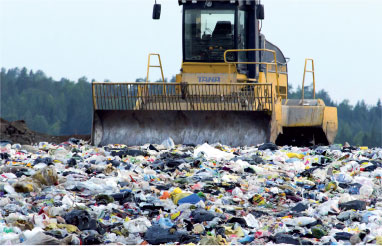
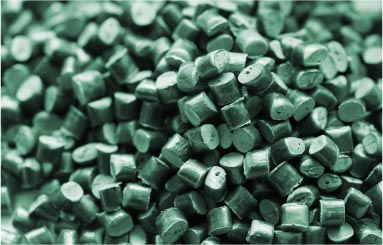
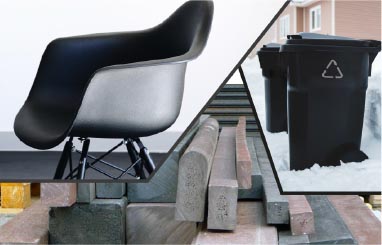
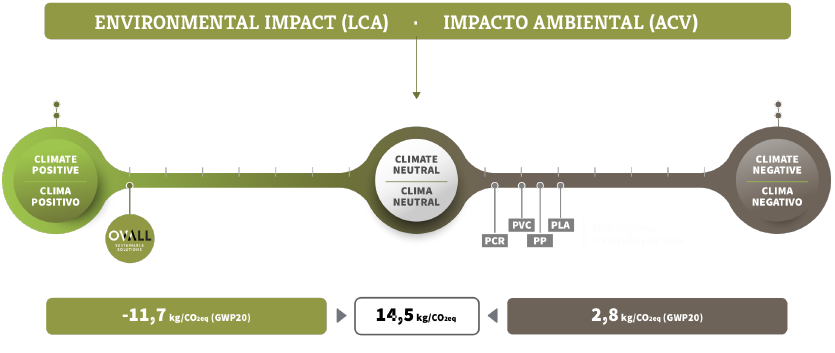
We use unsorted municipal solid waste as raw material, avoiding high-emission incineration and diverting it from landfills, thereby reducing emissions and producing a net negative carbon footprint.
When our material is combined with conventional (petroleum-based) polymers, it can offset the carbon footprint of other mixed materials. This can result in carbon neutral or even carbon negative products.
Through waste diversion, conversion, and resource efficiency, recycle municipal waste into a valuable resource:
– Conversion of organic and plastic compounds into valuable materials.
– Reduce the need to extract new fossil resources.
– Create a closed-loop system to replace the single-use linear system..
– Our thermoplastic compounds are fully recyclable, further contributing to the circular economy.
For every ton used, up to 15 tons of CO2e are saved.


We only have 12 years left to reduce global warming levels. A zero waste approach is one of the fastest, cheapest and most effective solutions to reduce emissions while accelerating the transition to a circular economy.


